
Last Updated: June, 2026
You got the hearing notice. You attended the hearing. The officer asked a few questions, checked your documents, and the meeting ended without any obvious problem.
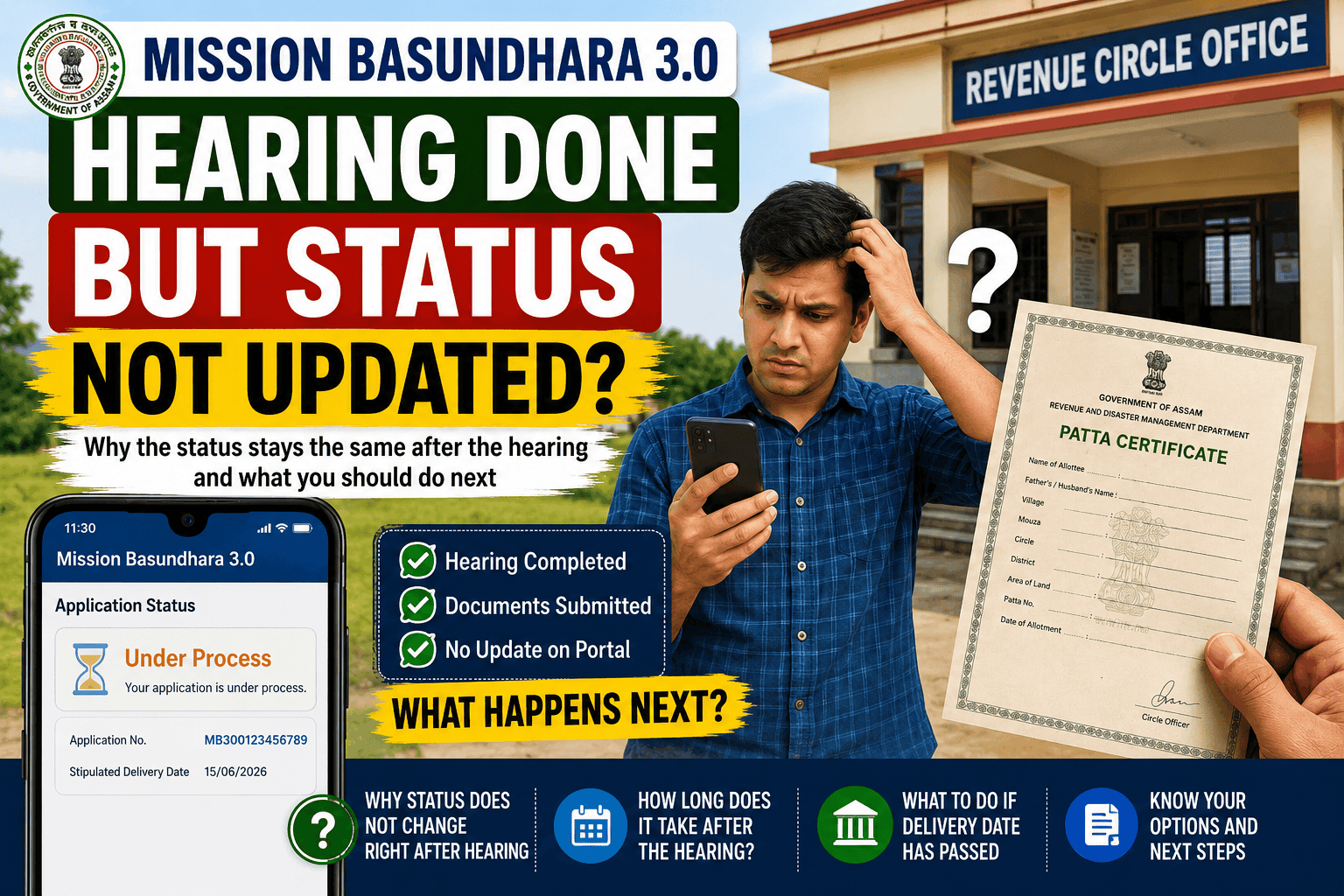
Then you went home, opened the portal, and saw the same status as before.
A few days passed. Then a few more.
The confusion usually starts here. Most people assume the hearing is the final step, so when the status does not change immediately, they begin to wonder whether something has gone wrong with the application.
In most cases, it has not. The hearing is only one stage in the process, and there are still a few internal steps before the final order is issued.
Why the Status Does Not Change Right After the Hearing
Many applicants leave the hearing thinking the decision has already been made. In reality, the hearing is usually only one part of the process.
Once the hearing is over, the file does not immediately turn into an approval or rejection order. The officer still has to record the hearing proceedings and update the case file. After that, the application continues through the normal administrative process. Depending on the type of service and the circumstances involved, the file may remain at the Circle Office for further examination or be forwarded for review before an order is passed.
This is why applicants often continue to see “Under Process” on the portal even after attending the hearing. From the applicant’s perspective, the hearing feels like the final stage. From the department’s perspective, however, there are still administrative steps left before the application can be closed.
If the status has not changed a few days after the hearing, that alone is not a sign of rejection. It usually means the file is still moving through the system.
Why You Were Called for a Hearing
Not every Mission Basundhara application reaches the hearing stage. When a hearing notice is issued, it usually means the officer needs to clarify something before passing an order.
In many cases, the reason is an objection raised during verification. If your application is still in the verification stage and no hearing has been scheduled yet, you may find our guide on Mission Basundhara Physical Verification: What Happens During the Verification Process helpful. A neighbour, family member, co-pattadar, or another person connected to the land may have disputed part of the application. Before making a decision, the officer is expected to hear both sides and record their statements.
A hearing may also be scheduled when there is a mismatch between the application and the available land records. Something as simple as a difference in name spelling, land area, Daag number, or ownership details can lead to additional verification before the file moves forward.
For certain services, a hearing is part of the process itself. Applications involving removal of a name from a patta, disputed ownership issues, or matters affecting multiple parties often require affected persons to be given an opportunity to present their side before an order is issued.
Sometimes the issue is much simpler. The officer may only need clarification regarding a document submitted with the application, such as a legal heir certificate, court order, or other supporting record.
Although the reasons vary from case to case, the hearing usually serves one purpose: helping the officer clear up an issue before deciding the application.
Receiving a hearing notice is not automatically a sign that something is wrong with the application. In many cases, it simply means the officer wants clarification before making a decision.
If you have recently received the notice and are still preparing for the hearing, see our guide on Mission Basundhara Hearing Notice: Meaning, Next Steps and What to Do Before the Hearing Date.
How Long Does It Take After the Hearing?
The difficult part is that there is no single timeline that applies to every application. Some files move quickly after the hearing, while others remain under process for several weeks.
A lot depends on what happened during the hearing itself. If the officer only needed a simple clarification and all supporting documents were already available, the file may move forward without much delay. On the other hand, applications involving objections, competing claims, or additional verification often take longer because the officer may need to review more records before issuing an order.
Applicants are often surprised by how little visible activity there is during this stage. The hearing happens on a specific date, but the work that follows takes place inside the office and usually does not appear on the portal until a decision is recorded.
In straightforward cases, applicants sometimes see an update within a few weeks. More complicated cases can take considerably longer, especially when multiple parties are involved or additional documents have been requested.
Another reason applicants become concerned is that the portal often remains unchanged throughout this period. Even when internal processing is taking place, the public status may continue to show “Under Process” until the final order is entered into the system.
What You Should Check Right Now
Before assuming the application is stuck, spend a minute checking the status page carefully. There are two details that are easy to miss and can save you an unnecessary trip to the Circle Office.
First, check whether the stipulated delivery date has already passed. Many applicants become worried immediately after the hearing even though the service timeline is still running. If the delivery date is still in the future, the department technically has time left to process the file.
Also look closely at any remarks shown on the status page. Most people focus only on the main status banner, but occasionally the useful information appears in the remarks section. You may find references to a hearing being conducted, a file being forwarded, or a request for additional documents.
If both the status and remarks section look unchanged, that does not automatically mean the file is inactive. It may simply mean no public-facing update has been entered yet.
For applications that remain unchanged for months without a hearing or final order, see our article on Mission Basundhara Status Stuck Under Process: Common Reasons and What to Do Next.
What To Do If the Delivery Date Has Passed
If the stipulated delivery date has already passed and there is still no update, it is worth making a visit to the Revenue Circle Office rather than relying only on the portal.
Carry the documents that will help staff locate your file quickly:
- Application reference number
- Acknowledgement slip
- Hearing notice
- Aadhaar card
When speaking to the office, try to find out where the file is currently sitting and whether any further action is pending. A question such as:
“My hearing has already been completed. Could you tell me the current stage of the file and whether any order has been passed?”
usually produces a more useful response than a general enquiry about the application.
In a busy office, having the application number ready and asking about the current stage of the file makes it easier for staff to check the record.
Sometimes applicants learn that the file has already been forwarded for further review. If that happens, ask when it was forwarded. The forwarding date often tells you more about the delay than the status page itself.
If the final order is eventually passed against your application, our guide on Mission Basundhara Application Rejected: What the Rejection Actually Means and How the Appeal Process Works explains the next steps available.
If Someone Is Asking You to Pay for the Order to Move Forward
One concern that occasionally comes up during delays is whether money needs to be paid to “move” the file. Applicants sometimes hear rumours that a payment will help an order get issued faster or improve the chances of approval.
Mission Basundhara services themselves do not require any unofficial payment. Regardless of who makes the suggestion, there is no official fee for attending a hearing, moving the file after the hearing, or obtaining the final order.
If the stipulated delivery timeline has already passed and you are unable to get a clear explanation for the delay, consider using the RTPS grievance mechanism instead of relying on intermediaries or verbal promises. You may also contact the Mission Basundhara helpline for guidance.
Whenever you visit the office, note down the date, the person you spoke with, and the information provided. Most cases are resolved without any formal complaint, but keeping a simple record can be useful if you later need to escalate the matter.
Cases That Often Take Longer
Not all Mission Basundhara applications move at the same speed. Some categories naturally take longer because they affect the rights of other people or involve records that require closer examination.
If another person attended the hearing and disputed part of your claim, the officer may need additional time to review documents, examine statements, or seek further clarification before issuing an order. The same can happen in matters involving partition, ownership disputes, or corrections that affect multiple names in the land records.
The portal usually does not show these internal steps in real time, which is why applicants often feel that nothing is happening even when the file is still under active consideration.
In these situations, seeing “Under Process” for an extended period is not necessarily a sign that something has gone wrong. The process may still be moving forward behind the scenes.
The process is working — it is just not fast.
Some applicants are told during the hearing that everything appears to be in order, only to find that the portal continues showing “Under Process” for weeks afterwards. This often causes unnecessary worry. A positive hearing is encouraging, but the status normally changes only after the order is formally recorded in the system.
Should You Be Concerned?
The hearing was a step inside a longer process, not the end of it.
Many applicants expect the portal to change immediately after the hearing because that is the last stage they personally attend. In reality, the file may still be moving through internal review and approval steps before a final order is recorded.
If your stipulated delivery date has not yet passed, there is usually little reason to worry about an unchanged status. If the timeline has already expired, follow up with the Revenue Circle Office and ask about the current stage of the file.
An unchanged “Under Process” status after a hearing is often a sign that the application is still being worked on, not a sign that it has been rejected.
For a complete overview of all Mission Basundhara stages, services, timelines and application tracking methods, visit our Mission Basundhara 3.0 Complete Guide.
Frequently Asked Questions
My Mission Basundhara hearing was done months ago but the status still shows Under Process. Is it rejected?
No. “Under Process” after a hearing means the order has not been passed yet — not that the application has been rejected. If your stipulated delivery date has passed, visit your Revenue Circle Office with your reference number and ask for the current stage.
The officer said my documents were fine during the hearing. Does that mean the application will be approved?
Not necessarily. A positive discussion during the hearing is usually better than being asked to correct major issues, but the final decision is based on the complete file, verification reports, applicable rules, and any objections on record. The application is only officially approved when the order is passed.
The hearing notice said I needed to bring documents. I brought them. Do I need to submit them separately?
If you handed the documents directly to the officer during the hearing, they should normally become part of the hearing record. If you are unsure whether they were attached to the file, confirm with the office rather than assuming they have been recorded.
The officer said my case has been forwarded to the SDO. What does that mean?
This is normal for cases involving objections or complex land disputes. The Sub-Divisional Officer reviews the hearing record and passes the final order. Ask the Circle Office to give you the SDO forwarding date so you can follow up at that level if the timeline extends.
My hearing was completed, but the other party did not attend. What happens now?
If the hearing involved another party and they did not appear, the officer may still proceed according to the applicable rules and the records available. However, the exact next step depends on the nature of the objection and the service involved. The absence of another party does not automatically result in approval, but it also does not necessarily stop the process.
My hearing was completed more than 60 days ago. Should I follow up?
Yes. While some applications take longer than others, a delay of several months after the hearing is generally worth checking with the Revenue Circle Office. Ask where the file is currently pending and whether any additional action is required from your side.

Hi, I’m Palash, the person behind AssamInfoHub — an independent platform helping Assam citizens understand government schemes, pensions, and welfare programs in simple language. Information published here is compiled from official government notifications, district-level practices, and Panchayat-level verification methods. My goal is to reduce misinformation and help families follow the correct procedures without depending on agents.